Worktrip Autopilot
Restoring work trip efficiency through Agentic AI
A natural-language, agentic AI travel system that transforms fragmented corporate trip planning into a simplified workflow, from single sentenced intent to booking.
Role
Product Designer (UX/UI, AI Logic)
Responsibilities
User Research & Analysis, Design & Prototyping & Motion, User Interview & Testing, Product Management
Client
TravelTech Innovations
Tools
Figma, Flowise, Supabase, LLM (Grok/Gemini)
Duration
Aug 2025 - Dec 2025
PROJECT BRIEF
Today corporate travel is a "manual chaos" of disconnected tools. Travelers jump between 5+ tabs — Calendar, Slack, Policy Docs, Booking Sites — to coordinate a single trip. This forces employees to manually coordinate dates, budgets, and policies, turning a simple request into a high-cognitive-load task.
Our goal was to design an autonomous system that doesn’t just surface information, but executes coordinations—while keeping humans firmly in control.*
*In an ambiguous brief, I began by defining the core constraints of the problem, highlighted above in bold.
Painpoints
Challenges that Corporate & Business Travelers face
Synthesized research into three high-impact challenges
Challenge 1.
Fragmented Planning
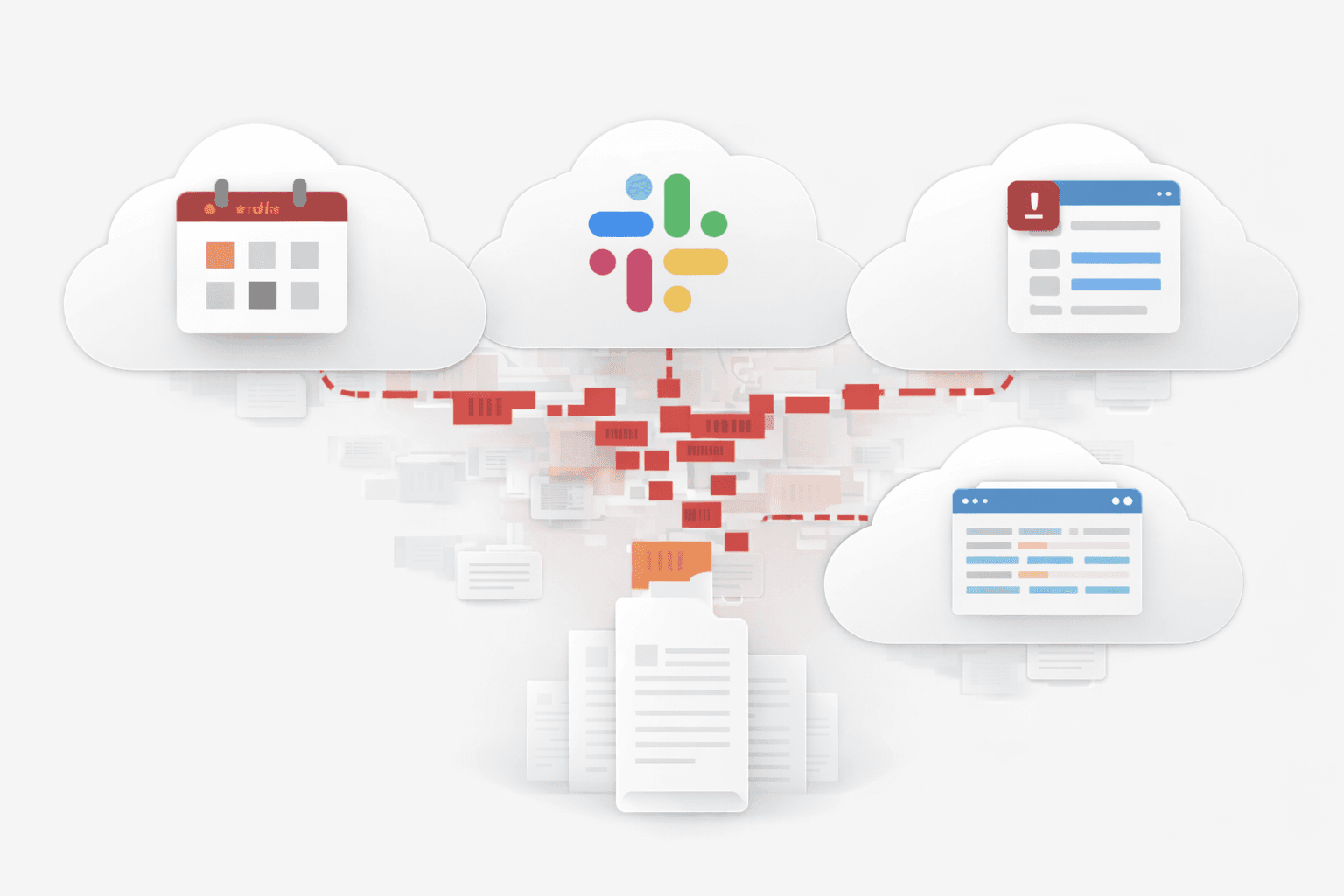
Critical travel data is scattered across tools, forcing travelers to mentally reconcile policy, pricing, and availability.
Challenge 2.
Unclear Decision-Making
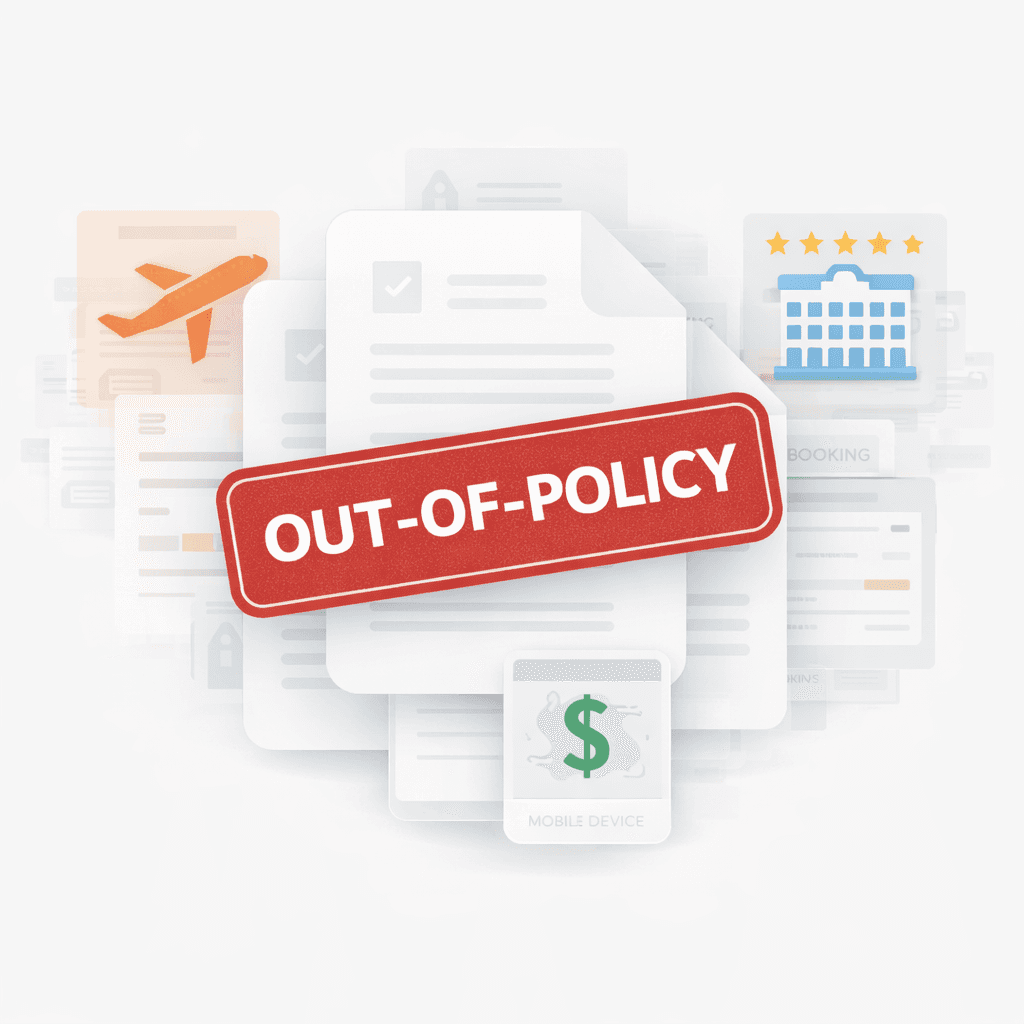
When tools are too complex, employees book out-of-policy, costing companies billions annually in unmanaged expenses.
Challenge 3.
Dead-End Group Coordination
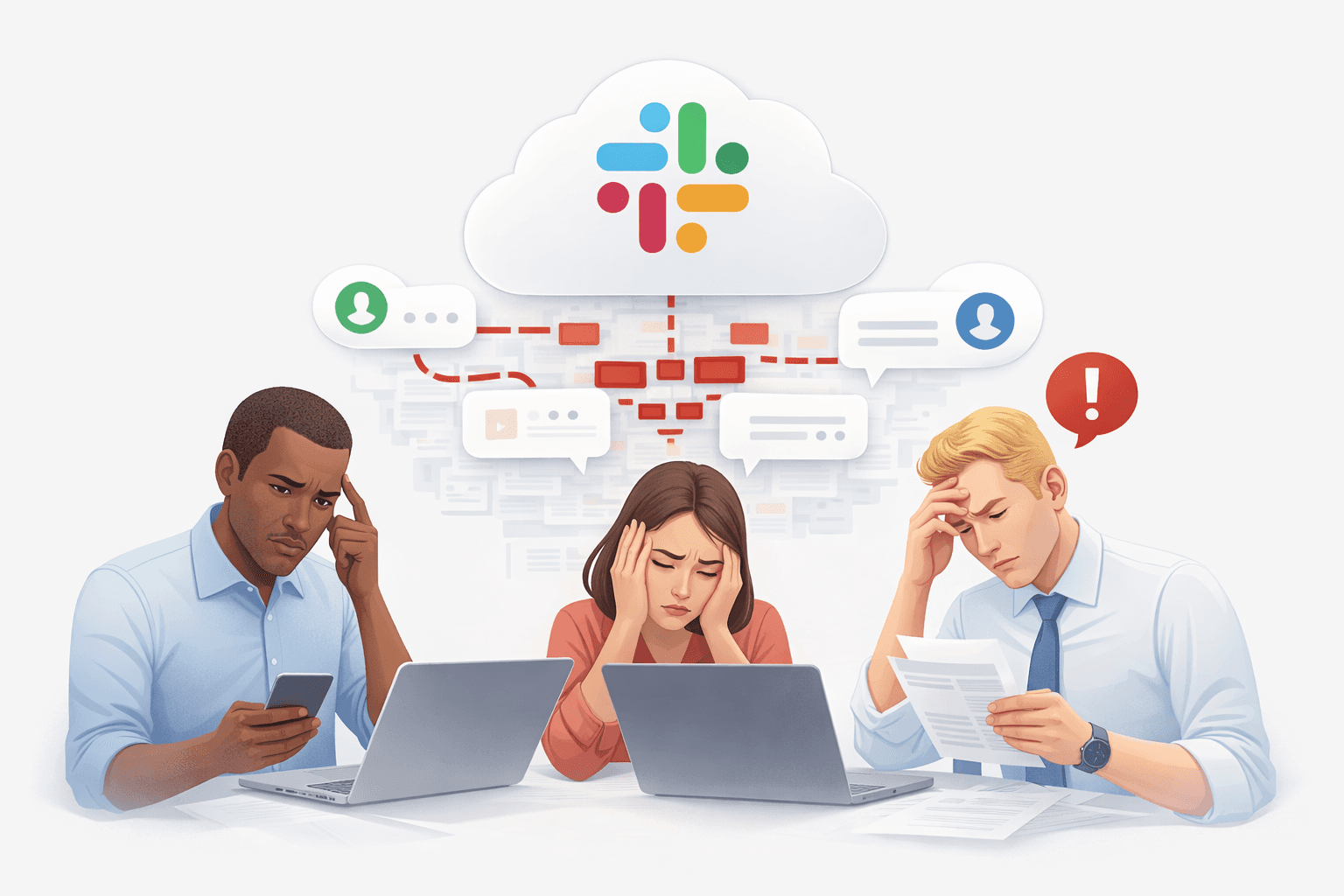
Coordinating group travel remains a Slack-heavy, back-and-forth process across multiple platforms.
REFRAMED PROBLEM STATEMENT
“How might we design an AI travel system that helps business travelers move from intent to confirmed, policy-compliant booking in one seamless flow?”
DESIGN PROCESS
A step-by-step approach from system mapping to iterative refinement
System & Capability Mapping
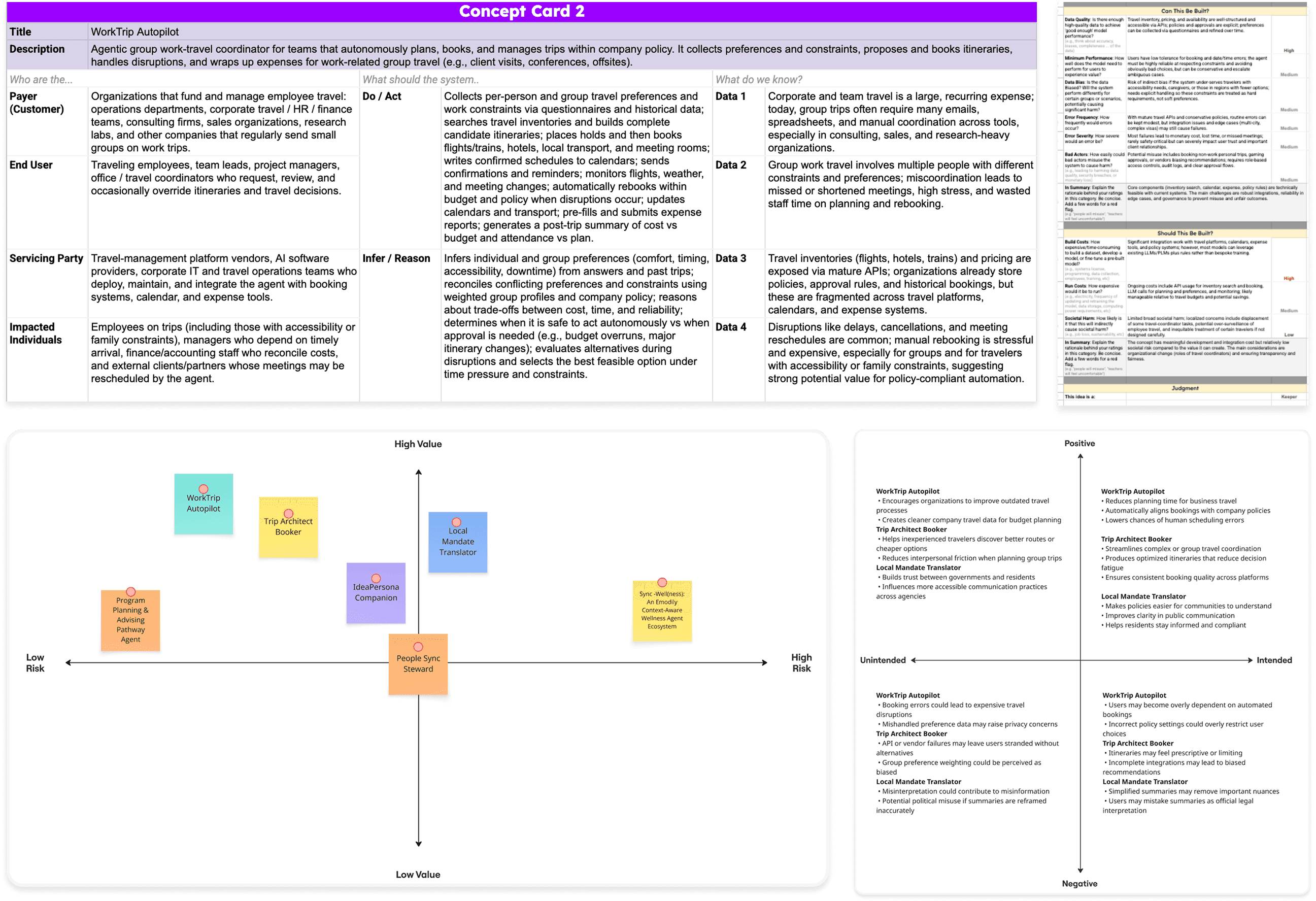
Mapped AI capabilities to core system features
Iteration & Workflow Structuring
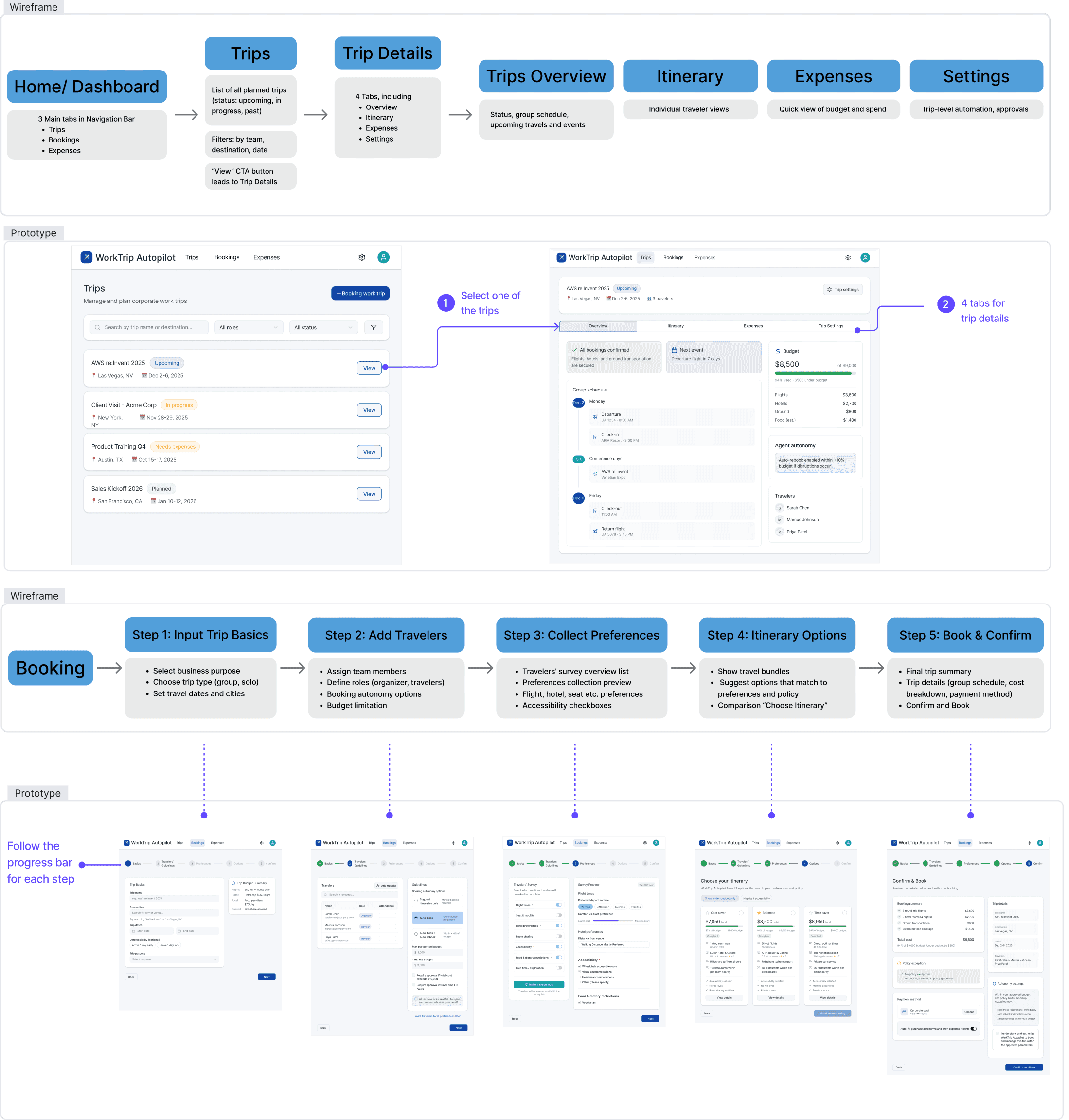
Defined system workflows with refined flow logic
Early Prototyping
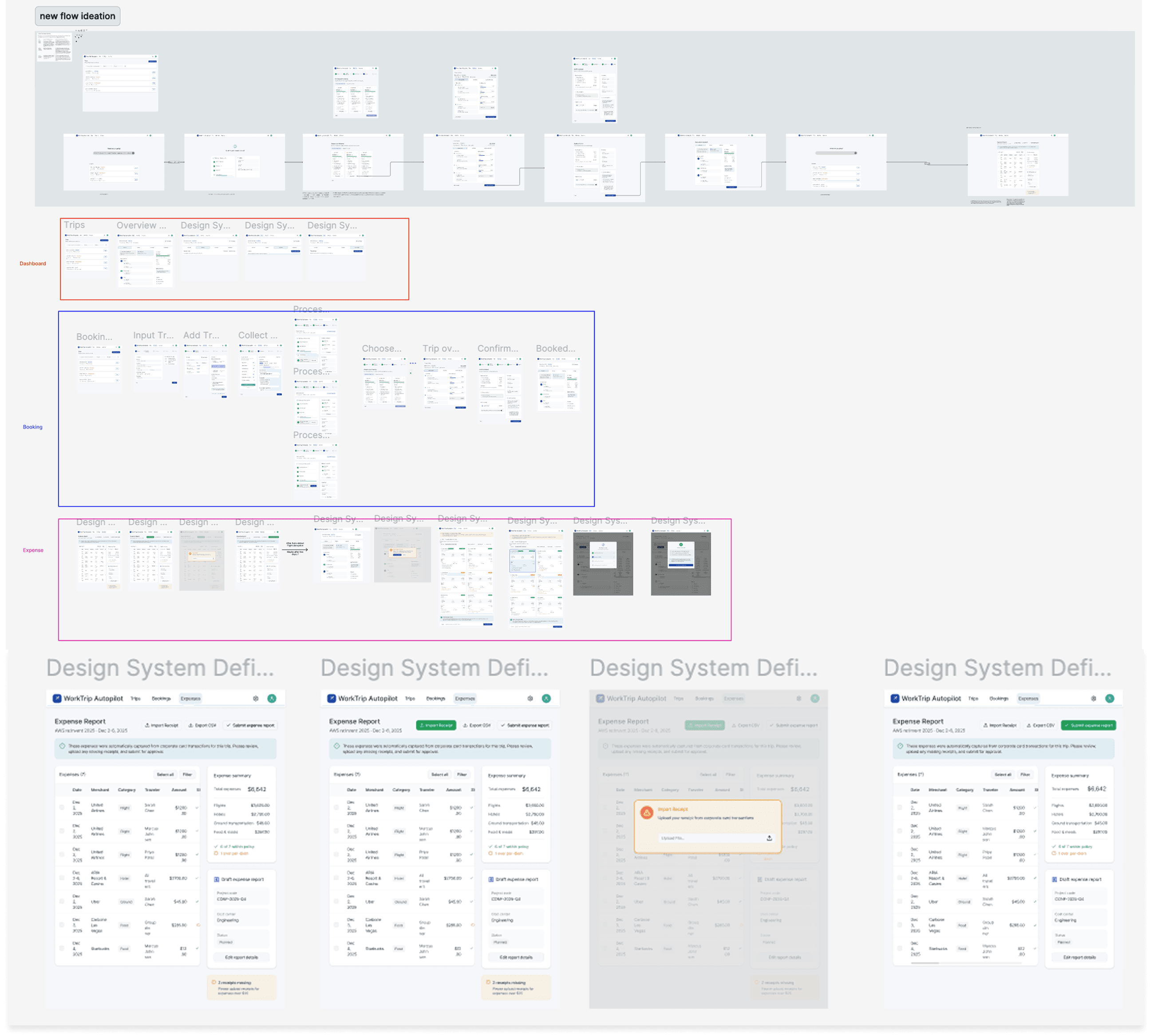
Built early prototypes to test system interactions and behaviors
Testing & Prototype Refining
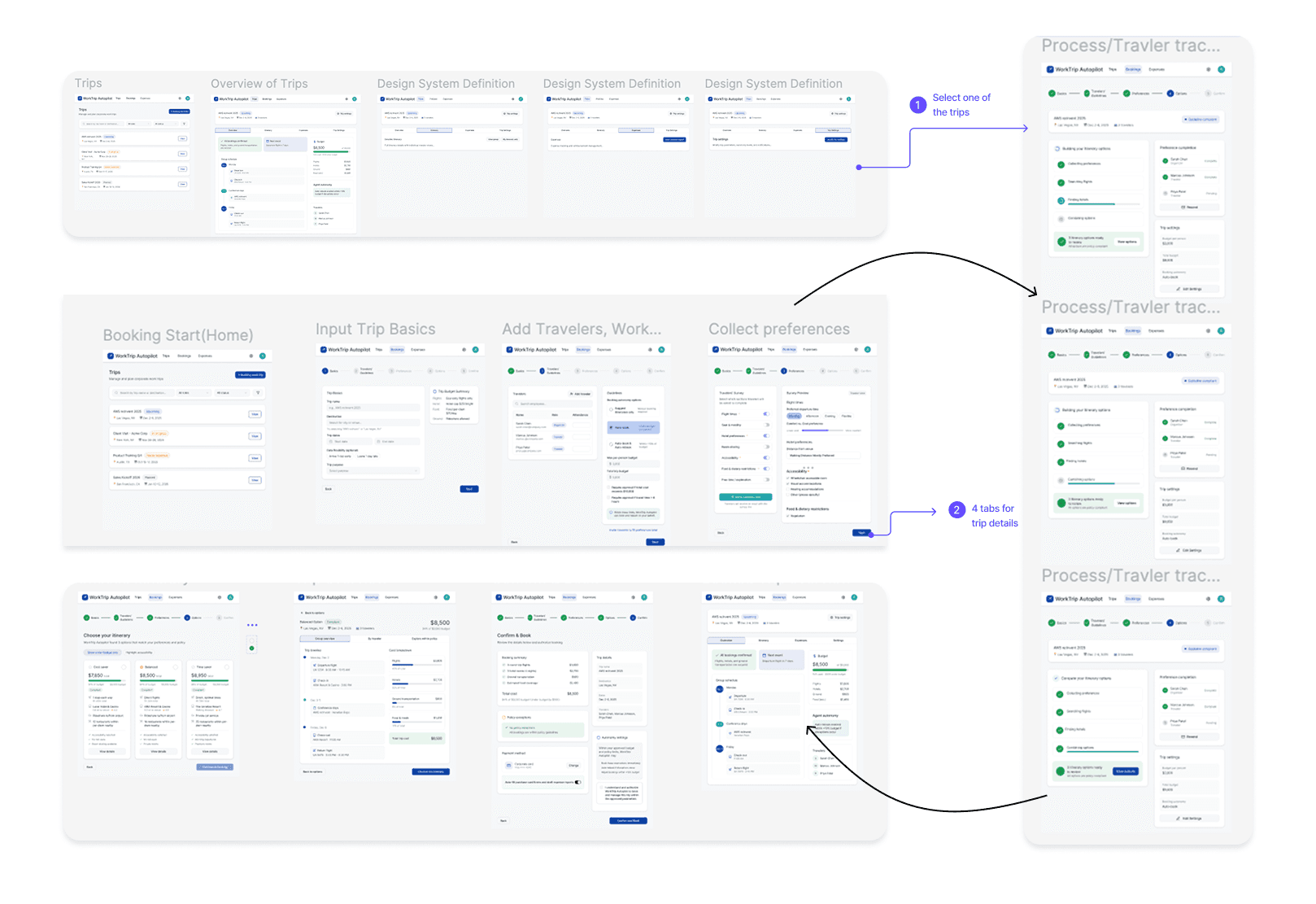
Iterated on flows, transitions, and edge cases to improve clarity and usability
SOLUTION 01
Understand Intent: Unified Entry Point
From fragmented inputs → a single structured starting point
Users describe their trip in one sentence,
“Book a trip from Pittsburgh to Seattle, January 11–13, for 3 teammates.”
Instead of navigating fragmented inputs, the system captures and organizes intent into a unified starting point.
How it Works
An AI-powered input layer parses natural language into structured trip data
—capturing destinations, dates, and travelers in real time while identifying missing information without assumptions.
Strong Point
✅ Translates natural language into a clear, editable structure
Design Purpose
✅ Replaces fragmented inputs with a single unified entry point
Strong Point
✅ Provides immediate feedback: “Here’s what I understood”
✅ Reduces ambiguity before AI action
Design Purpose
✅ Builds trust by clarifying intent before execution
SOLUTION 02
Guide Decisions: Structured, Policy-Aware Choices
From overwhelming options → clear, prioritized decisions
Instead of presenting long lists of options, the system organizes results into structured, decision-ready groups.
Users are guided through trade-offs—cost, time, and balance—so they can choose with clarity, not guesswork.
How it Works
The system transforms raw results into structured decision bundles
—grouping options by strategy (Cost, Balanced, Time) and prioritizing policy-compliant choices,
enabling fast and informed comparison.
Strong Point
✅ Groups options into strategic bundles (Cost / Balanced / Time)
✅ Highlights trade-offs instead of raw listings
✅ Surfaces policy-compliant options
Design Purpose
✅ Reduces cognitive load from overwhelming choices
✅ Enables quick comparison across key dimensions, with informed decision-making
SOLUTION 03
Enable Execution & Coordination
From individual planning → shared, actionable workflow
Once decisions are made, the system transitions from planning into execution.
Instead of fragmented booking steps, it consolidates trip details, validates constraints, and supports coordination
—turning plans into actionable outcomes.
How it Works
The system consolidates all trip components into a unified execution layer—combining itinerary details, cost breakdowns, and policy validation—while enabling collaboration and alignment before booking.
Strong Point
✅ Embeds policy checks into the trip view to flag risks before booking
Design Purpose
✅ Prevents policy violations before they occur
Strong Point
✅ Enables shared visibility and coordination across travelers
Design Purpose
✅ Transforms booking into a collaborative workflow
However…
When Planning Ends, Reality Begins
Once a trip is confirmed, most systems enter a dead state.
LIMITATION
Travel itself is unpredictable. If a flight is delayed or canceled mid-trip, travelers are forced back into manual survival mode—calling support, refreshing booking sites, and trying to stay within policy under pressure.
Current travel platforms optimize for planning, not resilience.
12 In-Depth Interviews
Feel Abandoned After Booking
Participants described disruptions as moments of cognitive overload, where they were forced to re-plan manually. Once a trip is confirmed, support disappears.
+50 Survey
Confidence Drops After Booking
Only 31% of travelers felt supported during disruptions, while 64% were forced into 'manual survival mode', relying on fragmented workarounds like calls, emails, and screenshots.
It's Time to Look Ahead
So how might WorkTrip Autopilot evolve beyond static planning?
I reimagined Autopilot as a Proactive Travel Guardian—a system that remains active, transparent, and trustworthy throughout the journey, especially during disruptions.
FUTURE SOLUTION 01
Proactive Disruption Detection
Instead of last-minute calls and emails, Autopilot speaks first.
By continuous monitoring on global flight data, it surfaces a signal directly, when a disruption is detected.
✅ The system surfaces a bottom-up alert card directly with clear signal “Agent intervention detected.”
FUTURE SOLUTION 02
Explorable Agent Reasoning
Instead of silent automation, Autopilot makes its reasoning visible.
When a disruption occurs, users can inspect why the agent acted—before approving any changes.
✅ The system exposes a human-readable activity log through “Agent Activity Log.”
FUTURE SOLUTION 03
Curated Recovery Decisions
When plans break, users don’t need more data—they need clarity.
Autopilot replaces manual comparison with strategic recovery choices.
✅ The system presents 2–3 policy-compliant recovery strategies instead of raw flight lists.
FUTURE SOLUTION 04
Clear Resolution State
After recovery, travelers shouldn’t wonder what’s still valid.
Autopilot closes the loop with a definitive, readable resolution state.
✅ The system confirms the new state of the trip using high-contrast semantic badges,
"Confirmed (new changes applied)" & "Unchanged (preserved bookings)"
IMPACT
To evaluate the effectiveness of WorkTrip Autopilot, we conducted pilot demos and comparative walkthroughs against existing corporate travel platforms.
Across testing, participants consistently reported a shift from manual coordination to confident delegation. Instead of jumping between calendars, policy documents, and booking sites, users were able to understand, approve, and trust the system’s decisions in one continuous flow.
“I don’t feel like I have to double-check everything or jump back and forth between platforms just to book one trip. I can clearly see what was booked and why, and that makes me feel secure.”
— Pilot participant
92%
Reduction in Time-to-Book
Group travel planning dropped from ~12 minutes to under 1.5minute by replacing manual filtering with intent-based planning.
100%
Policy Compliance Maintained
All itineraries surfaced were pre-vetted against corporate travel rules, eliminating out-of-policy “shadow spend” at the decision stage.
18.5%
Increase in User Confidence
Participants reported feeling more in control due to transparent planning states, readable summaries, and clear confirmation views.
KEY TAKEAWAYS
Leading this project as a UX Designer, challenged me to work deeply within ambiguity, not just designing interfaces, but shaping how humans and AI collaborate in high-stakes, real-world contexts. WorkTrip Autopilot reinforced my belief that strong AI-driven products emerge at the intersection of autonomy and control, where systems act decisively while keeping humans confidently in the loop.
01. Finding a starting point in ambiguity
Early on, the problem space was intentionally open-ended. Progress came from identifying clear constraints — policy, budget, group dynamics — and using them as anchors for exploration rather than obstacles. Defining what the system should never do was just as important as imagining what it could do.
Position #2
Position #3
Position #4
Position #5
Position #6
02. Designing trust in AI, not just automated functionality
I learned that trust in AI systems isn’t built through a single “confirm” button. It’s built gradually — by exposing reasoning at the right moments, translating complexity into human-readable states, and allowing users to stay oriented throughout the process. Showing the work mattered as much as delivering the result.
Position #2
Position #3
Position #4
Position #5
Position #6
03. Building scalable product by collaborating with developers
This project was built in close collaboration with engineers and technical teammates, where design decisions had direct implications on system logic, data flow, and agent behavior. Working alongside developers helped me design interfaces that were not only expressive, but also technically grounded and feasible — strengthening my ability to bridge product vision and implementation.
Position #2
Position #3
Position #4
Position #5
Position #6
Extended Work
Beyond the core product design, I contributed to the broader system thinking, technical integration, and storytelling across multiple artifacts.
Technical Collaboration
Flowise — LLM orchestration and agent logic prototyping
Supabase — Data modeling and state persistence
OpenRouter — Multi-model experimentation (Grok, Gemini)
FastAPI + Google Flights API — Live flight data exploration and constraints testing

